In foundry, heat is a managed constant, but water is an unpredictable energy multiplier. Charging cold, wet scrap into a molten bath remains the most significant threat to both personnel safety and operational profitability.
By re-engineering the charge sequence, foundries can transform a high-risk bottleneck into a streamlined source of competitive advantage.
The Triple Penalty: Safety, Structural, and Thermal Liabilities
The practice of "cold and wet charging" imposes a three-fold burden on foundry operations:
- Steam Explosion Risks: Charging scrap stored in outdoor yards - containing ice, snow, or entrapped rainwater - into a molten bath triggers an instantaneous phase expansion of roughly 1,600 times the liquid volume. These steam explosions are the primary cause of catastrophic facility damage and operator fatalities.
- Thermal Shock and Refractory Degradation: Introducing massive cold charges into a bath at >1,500 °C creates severe thermal shock. This leads to micro-cracking in the furnace lining, increasing maintenance frequency and reducing the furnace’s lifespan.
- Energy Waste: For the modern foundry, energy costs are a competitive constraint. Yet, a significant percentage of thermal inefficiency occurs even before the furnace is struck. The bulk introduction of cold material causes a sharp temperature drop in the bath, requiring massive energy peaks to restore the required thermal equilibrium.
Re-engineering the Scrap Charge Value Chain: Magaldi's integrated Solution for Dosing, Conveying, Drying & Preheating
Magaldi has developed a comprehensive solution - already installed in a top-tier US foundry - that re-engineers the entire "Charge Value Chain" through three critical steps:
- Automated scrap and alloy dosing
- Material handling
- Scrap Drying & Preheating.
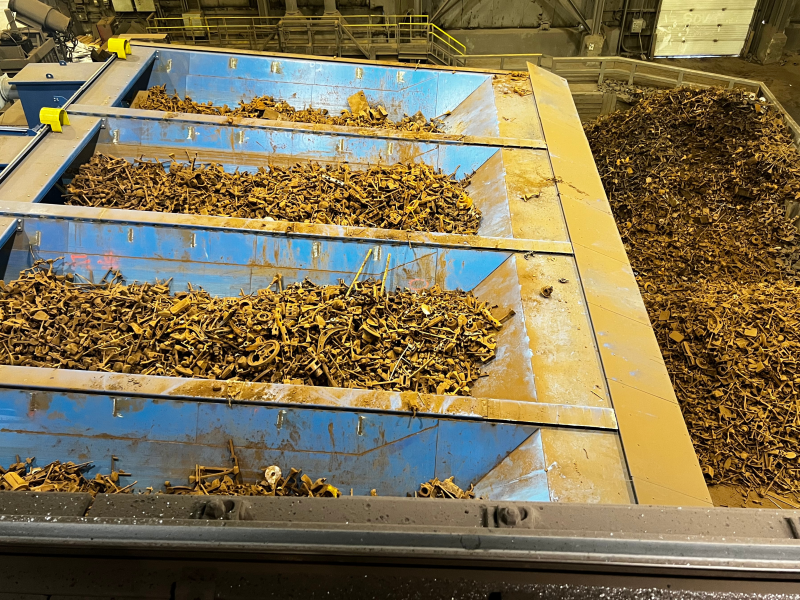
AUTOMATED DOSING - The system integrates heavy-duty feeders specifically engineered to thrive in the most severe scrap-yard environments. By receiving material directly from sorting magnets, the feeders streamline the flow from scrap pile to furnace, maximizing efficiency without compromising mechanical durability.
Rather than relying on approximate volumes, the process utilizes a data-driven approach to material management:
- Differential Weighing - Integrated Load Cells provide real-time accuracy that standard charging methods lack
- Dynamic Recipe Management - The system automates the delivery of complex metallurgical recipes, ensuring that every charge meets chemical specifications while reducing the margin for error.
RESILIENT MATERIAL HANDLING - Materials are transferred to a Superbelt® HD (Heavy-Duty) collector conveyor, designed to ensure a seamless and streamlined material flow. Its patented damage-tolerant design effectively withstands abrasive materials and eliminates the single-point-of-failure risks typical of conventional chain conveyors.
By preventing jams and resisting heavy wear, the Superbelt® guarantees continuous operation and near-zero mechanical failure, keeping the entire production line moving without interruption.
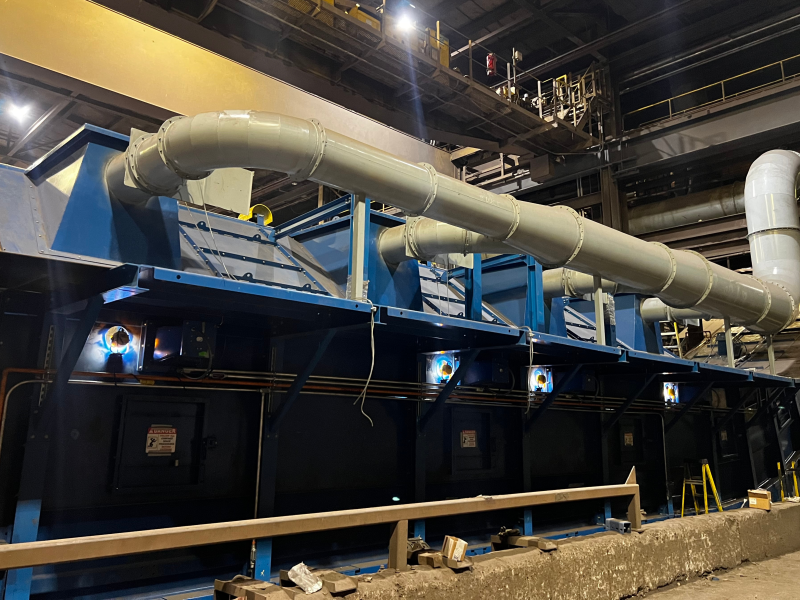
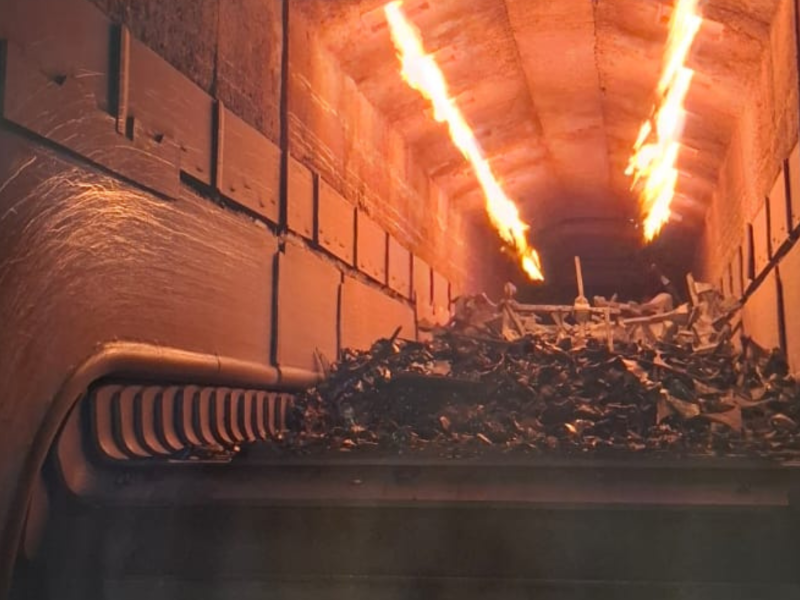
SCRAP DRYING AND PREHEATING - Finally, the recipe is transferred to a Magaldi high-temp conveyor for drying and preheating. This conveyor features a tunnel equipped with high-efficiency gas burners that evaporate all surface and entrapped moisture while raising the material temperature. By reducing the ΔT (temperature difference) between frozen/cold scrap and the furnace melt, the system effectively shifts the initial thermal load to a more cost-efficient gas-fired medium, optimizing energy consumption and enhancing furnace safety.
Strategic Advantages and ROI
The implementation of this integrated process delivers substantial operational and financial benefits:
- EXPLOSION PREVENTION - Thermal moisture removal eliminates the risk of steam explosions during furnace charging
- OPERATIONAL SAFETY - Automating scrap transport reduces overhead crane/bucket movement and minimizes hazardous interactions between heavy equipment and personnel
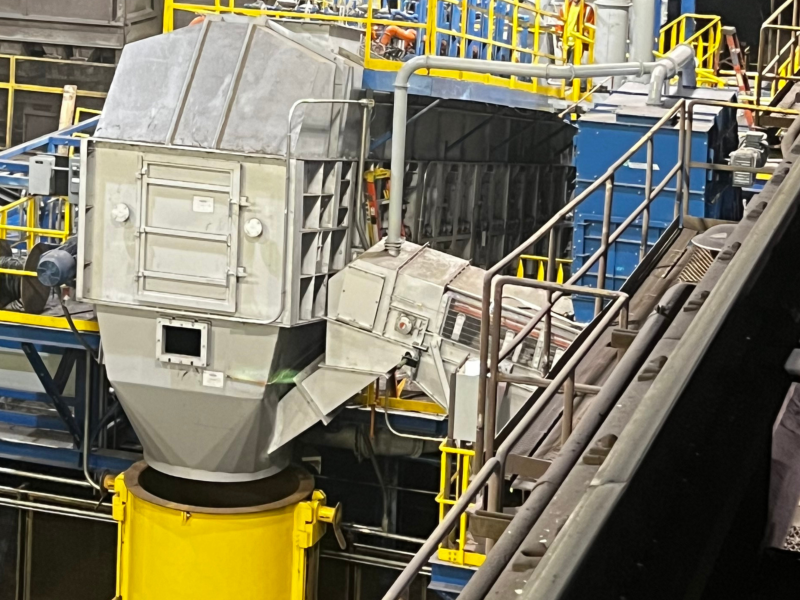
- AIR QUALITY - Integrated dust collection captures particulates and volatiles at the source, improving visibility and health conditions on the melt deck
- ENERGY OPTIMIZATION - Shifting the thermal load from electricity to gas reduces specific power consumption (kWh/t) and lowers the overall carbon footprint of the facility
- EXTENDED ASSET LIFE - Preheating minimizes the thermal shock experienced by the furnace, preserving refractory integrity and extending the intervals between maintenance downtime
- INCREASED THROUGHPUT - Shorter "tap-to-tap" cycles allow the foundry to boost total output without investing in additional furnace capacity.
Data-Driven Governance
The entire installation is governed by multiple Programmable Logic Controllers (PLCs). This advanced control layer synchronizes weighing, preheating, and material handling, providing operators with real-time data and ensuring that the furnace is always fed a consistent, optimized, and - most importantly - safe charge.
👉 Water in the furnace is a ticking time bomb. What’s your plan before it goes off?
Get in touch with our experts to secure your operations!