Poland is entering a phase of structural transition in waste management. Under the Krajowy Plan Gospodarki Odpadami (KPGO 2028) - the National Waste Management Plan - the country targets 4.2 Mt/year of thermal treatment capacity by 2034. This means that as Poland scales up Waste-to-Energy capacity, Incinerator Bottom Ash (IBA) will evolve into a promising secondary raw materials stream.
Regulatory and market shift in IBA management: from disposal cost to recoverable asset
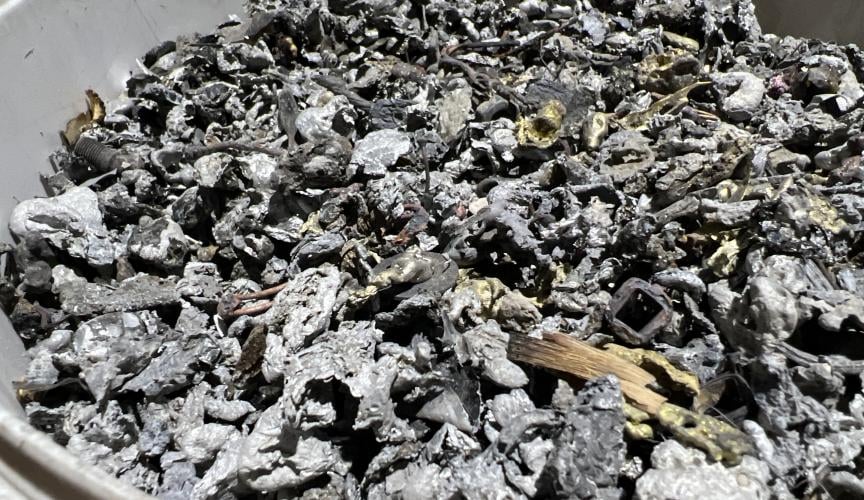
From an investment and engineering perspective, IBA is not a marginal stream. Typically, 20–25% of input waste mass exits the WtE process as IBA, containing ~5–15 % ferrous metals, 1–5 % non-ferrous metals, plus a large mineral fraction with potential secondary use.
At full rollout of KPGO targets, Poland could generate hundreds of thousands of tons of recoverable metals and mineral aggregates annually. IBA is therefore no longer a marginal by-product, but a material flow with measurable commercial value.
Historically, Polish WtE plants have relied on wet bottom ash extraction and cooling, followed by landfilling of untreated or poorly treated residues, largely due to the limited availability of metal recovery pathways and low landfill dependency costs.
That model is now changing. In alignment with EU waste directives, Polish policy is progressively moving toward:
- Mandatory material recovery where technically and economically feasible
- Reduction of residues sent to landfill
- Certification pathways enabling treated IBA to lose waste status and enter construction markets. Early precedents already exist. The Białystok WtE project demonstrates that properly treated bottom ash can be approved as secondary aggregate for road construction and civil engineering works.
Meeting these objectives makes the IBA discharge and treatment system a core design parameter, directly impacting regulatory compliance, landfill exposure, material revenues, and long-term project performance.
Dry bottom ash management as a strategic requirement: The MADAM system for landfill reduction and value recovery
As the focus shifts from disposal to valorization, the ash discharge system becomes crucial in determining the circular performance of a WtE facility.
Traditional wet systems:
- Degrade metal quality through oxidation
- Complicate downstream separation processes
- Increase water consumption and wastewater treatment costs
- Significantly limit reuse potential of mineral fractions.
From a lifecycle and financial perspective, this approach ties WtE projects to disposal-driven cost structures, weakens circularity performance, and undermines ESG positioning over the operational life.
By contrast, a dry approach to IBA discharge and treatment is emerging as a critical factor in project economics, permitting success, and long-term asset performance, as competitive advantage will not come from landfilling more efficiently, but from extracting more value from residues.
The MADAM (Magaldi Dry Ash Management) system is a fully dry, integrated solution designed to convert bottom ash from a disposal liability into a recoverable material stream.
Unlike wet systems, MADAM extracts and cools IBA without water, preserving both metal quality and mineral integrity from the very first stage and throughout the entire downstream treatment chain.
Key functional and strategic advantages of MADAM include:
- Fully dry extraction and cooling, preventing metal oxidation and preserving material integrity
- Improved efficiency of downstream ferrous and non-ferrous metal recovery, increasing revenues from secondary raw materials and improving overall plant economics.
- Recovery down to <20 mm fractions, where the highest concentration of non-ferrous and precious metals resides. With copper at 12,891.50 USD/t and aluminium at 3,056.00 USD/t (LME, Feb 2026), even small improvements in recovery rates materially impact annual WtE EBITDA.
- Production of clean mineral aggregates suitable for certification and reuse in construction applications
- Substantial reduction in ash mass sent to landfill, directly lowering disposal costs and landfill tax exposure (~20–30% reduction in ash weight versus wet systems)
In addition, the elimination of water from the ash handling process reduces operational complexity, water treatment requirements, and environmental risk, contributing to simpler permitting and improved ESG performance.
De-risking IBA Valorization: The Magaldi Ash Insight Unit
To support investors and operators in quantifying the real recovery potential before committing to full-scale treatment solutions, Magaldi has also developed the Ash Insight Unit - a mobile, industrial-scale test facility designed to assess IBA streams under real operating conditions.
By processing representative ash samples, the unit provides data-driven insight into:
- Ferrous and non-ferrous metal content
- Particle size distribution
- Fines behavior
- Mineral quality, with particular focus on the <20 mm fractions where value concentration is highest.
This upfront characterization enables stakeholders to validate business cases and reduce technical and financial uncertainty, transforming IBA recovery from an assumption into a measurable, bankable design parameter.
Watch the video to discover more about the Ash Insight Unit!
Conclusion
Poland’s WtE market is not defined solely by installed combustion capacity. As circular economy targets become binding, the management and valorization of IBA is emerging as a key lever for value creation and risk mitigation.
Projects that fail to capture this value create structural downside. In mature EU markets, specialized third- party operators already monetize IBA streams that plant owners leave behind. Poland is rapidly moving toward the same competitive landscape.
Dry IBA management through the MADAM system provides a strategic pathway that:
- Directly supports landfill reduction objectives
- Generates material value through high-yield metal and mineral recovery
- Strengthens circular economy outcomes for municipal waste streams
- Supports compliance with increasingly stringent EU waste, recycling, and landfill diversion requirements.
Will your WtE project capture the full value of its bottom ash - or leave it on the table for someone else?
Connect with us, explore MADAM, and turn IBA from a cost into a revenue-generating asset.